





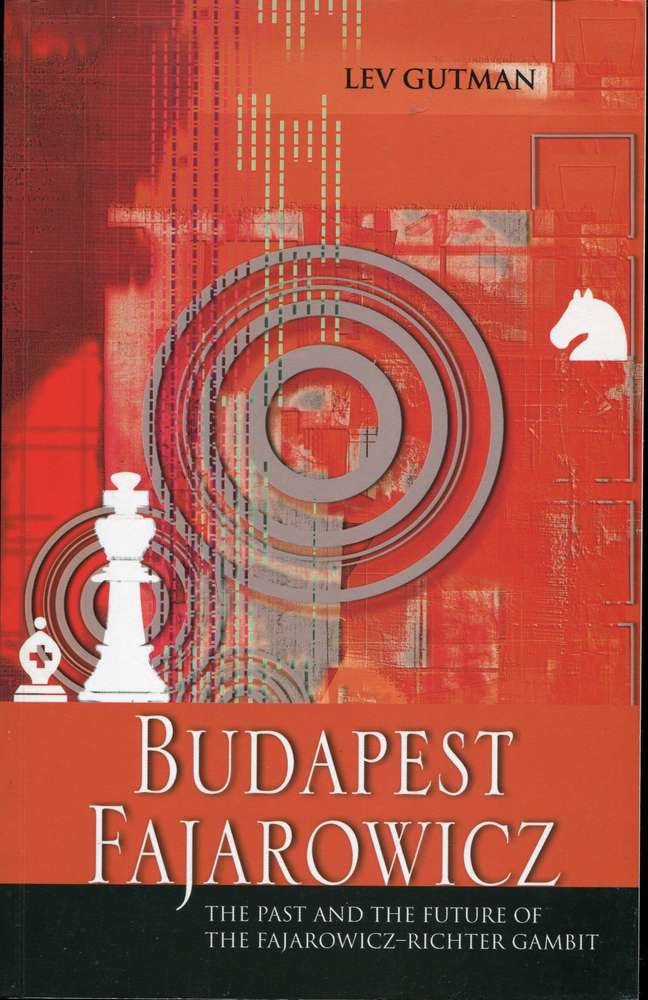
Gutman: Budapest Fajarowitz (Antiquariat)
Autor: Gutman, Lev
Verlag / Hersteller: Batsford
Erscheinungsjahr: 2003
Sprache: Englisch
Seiten: 292
Rehabilitate the Budapest Gambit with Modern Analysis of the Fajarowitz Variation
The Fajarowitz variation of the Budapest Gambit offers Black a fighting counterattack against 1 d4, yet mainstream opening theory has long dismissed it. This book by International Grandmaster Lev Gutman presents a comprehensive reassessment based on original analysis rather than database compilation.
Gutman, a renowned opening theorist and former second to Viktor Korchnoi, restores credibility to this ancient gambit with creative and concrete variations. The work bridges the gap between club practice and opening theory, revealing why this line remains a favorite among competitive players despite its poor reputation in traditional sources.
Highlights
- Deep analysis of the Fajarowitz variation, including critical lines against 1 d4
- Original research that challenges established theory and outdated assessments
- Practical guidance for club and tournament players seeking aggressive Black repertoire
- Author expertise: International Grandmaster with specialized knowledge of 1 d4 systems
- Focus on playable positions with genuine winning chances for Black
Essential for anyone building a solid and fighting response to 1 d4 with the Budapest Gambit.
FAQ
What is the Fajarowitz variation and why was it underrated?
The Fajarowitz variation is Black's aggressive response to the Budapest Gambit after 1 d4. For decades, opening theory dismissed it as inferior, though it remained popular with club players. Gutman's book demonstrates that with correct play, Black obtains genuinely playable positions.
Is this book suitable for club players or only strong players?
The book is specifically written for club and tournament players. While it contains rigorous analysis by an International Grandmaster, the author presents the material in a way that is accessible to intermediate players seeking to master this gambit.
How does this book differ from typical opening references?
Rather than reproducing database lines without evaluation, Gutman provides original analysis and creative variations. This approach helps readers understand the ideas behind the gambit and apply them in their own games.
Sichere Zahlungsoptionen bei uns im Shop









-
Versand mit DHL
-
Versandkostenfrei in DE ab €50
-
30 Tage Rückgaberecht