


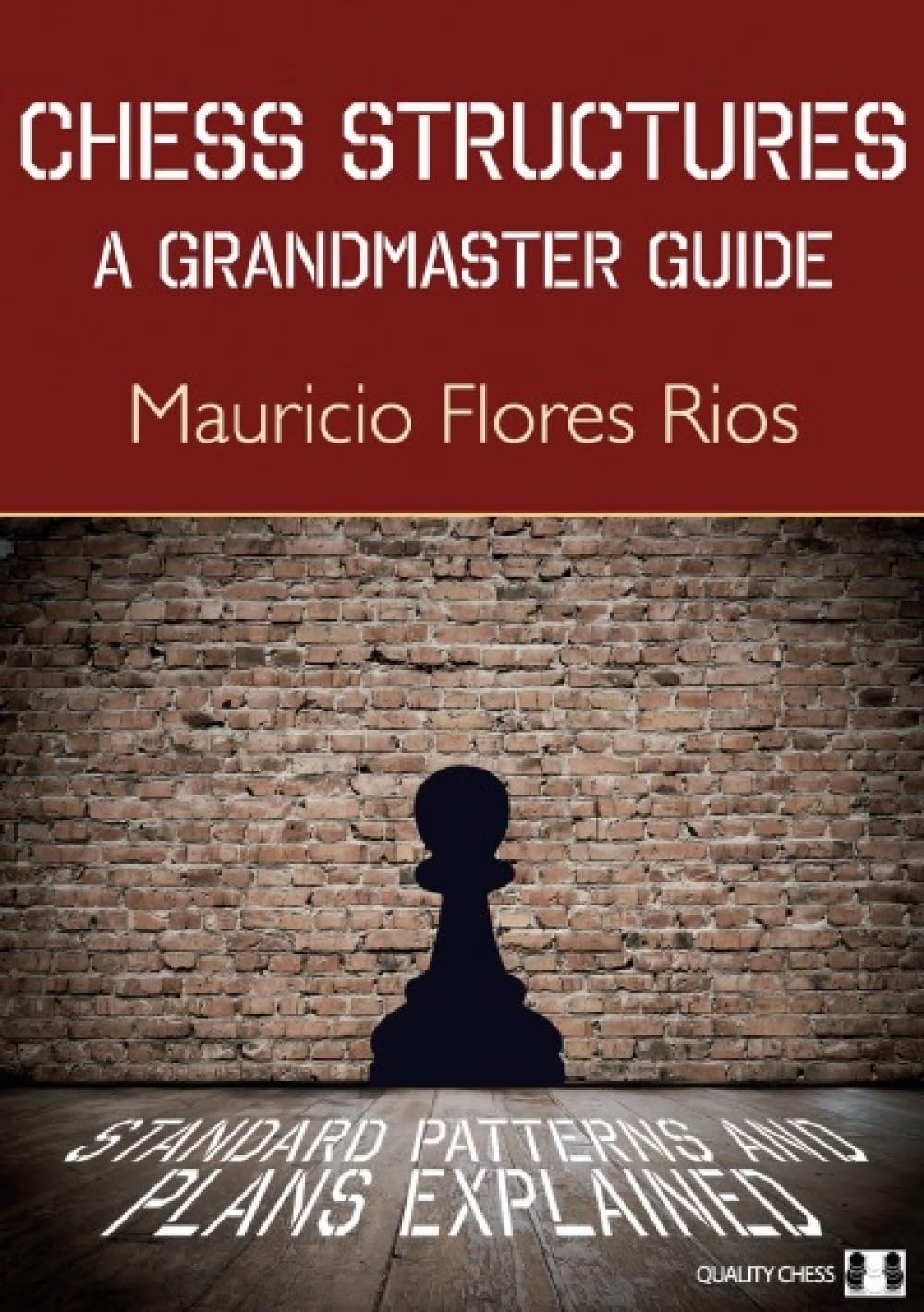
Rios: Chess Structures, 2nd Edition - A Grandmaster Guide
Autor: Rios, Mauricio Flores
Verlag / Hersteller: Quality Chess
Erscheinungsjahr: 2015
Sprache: Englisch
Buchumschlag: hardcover
Seiten: 464
Master Strategic Patterns Through 140 Annotated Games
Chess Structures: A Grandmaster Guide by Mauricio Flores Rios is a systematic study of the 28 pawn structures that dominate practical chess play. The book combines model games, strategic principles, and positional exercises to build a lasting understanding of how plans emerge from structure.
Intermediate to advanced players will find this approach direct: rather than memorizing variations, readers learn to recognize the recurring patterns, ideas, and typical plans that define each structure. By working through 140 annotated games and fragments, players develop the positional intuition needed to navigate middlegame and opening choices with confidence.
The second edition refines and expands on this proven framework, making it equally useful for tournament preparation and long-term strategic development.
Highlights
- 28 most common pawn structures analyzed through carefully selected model games
- 140 annotated games and fragments demonstrating plans, patterns, and ideas in action
- Strategic guidelines showing which plans suit each structure and which pitfalls to avoid
- 50 positional exercises with detailed solutions to test and reinforce understanding
- Foreword by GM Axel Bachmann endorsing the pedagogical approach
- Covers pawn structures across openings, middlegame, and strategic themes
A reference that bridges opening knowledge and middlegame play by anchoring strategy to structure.
FAQ
What makes this book different from opening repertoire guides?
Rather than teaching specific opening lines, Chess Structures focuses on the enduring strategic themes that arise from pawn formations. Players learn to think in terms of typical plans and positional ideas, which apply across many different openings and positions.
How are the 28 structures organized, and how should I work through the book?
The book groups structures by their strategic character and presents each through model games and annotated fragments. Readers can study structures individually or work through systematically; the 50 exercises allow for active testing of knowledge.
Is this book suitable for club-level players, or is it aimed only at strong players?
The book is designed for intermediate to advanced players seeking to deepen positional understanding. Studying the model games and patterns will benefit ambitious tournament players and those wanting to move beyond rote opening preparation.
Sichere Zahlungsoptionen bei uns im Shop









-
Versand mit DHL
-
Versandkostenfrei in DE ab €50
-
30 Tage Rückgaberecht